Covid-19 and Homeschooling at Home

All our weekly activities are officially cancelled. I’m betting yours are too. Are you now totally filled with dread at the prospect of having to stay cooped up at home separated from your social circle? I am. I need my external structure and regular access to people in order to stay well.

So to calm my nerves, I’m going to dust off a DIY summer camp guide I wrote in 2013 when I ran a totally different blog in Cambridge. We were broke back then too and since summer camp was off the table I wrote up a plan of themed activities, crafts, books and snacks for 10 weeks.

I’m going to share them with you here to help you survive at home while we all get through this period of social distancing. Maybe some structure to your days at home with your kids will help you too. In general this guide was originally written for younger elementary aged kids, but I’ll try to add things for people of all ages.

For each theme, I’ll write a single post and link them here as I write them. Here are the topics:

  1. Space
  2. Oceans
  3. Fine Arts
  4. Plants & Flowers
  5. Cooking & Chemistry
  6. Circus
  7. Animals/Farms
  8. Meditation
  9. Samurai
  10. Cat in the Hat Cancelled

My original guide included several field trips for every week. I will only include out-of-the-home activities if they take you places where you won’t be in close contact with other people.

Capitalism Ruins Everything

Let’s be frank, it’s a rough time to be a Broke Boston Homeschooler. The New York Times ran two opinion pieces a few days ago, one right next to the other. “How Working-Class Life is Killing Americans, in Charts” and David Brooks’ “Biden’s Rise Gives the Establishment One Last Chance.”

Source: KC Green, http://gunshowcomic.com/648
If you’ve never seen the full version of this strip, I recommend it though it is a little gruesome.

I frequently despair at the awful things that happen to people in the name of Capitalism that I read about in the Times. But, this was the combo that finally broke me and I cancelled my digital subscription. (Before you go pointing out the full cost of a digital subscription, I want you to know I fell into a surprising long-term $4 for 4 weeks deal over a year ago.)

Here’s what’s so upsetting: the establishment is causing the immiseration of the working class (and the rest of us) which is causing these increased deaths of despair. My interpretation is that the New York Times seems to want to continue with the establishment. If Establishment = Higher Death Rate, then Approving of Establishment = Approving of Higher Death Rate.

I feel like Capitalism is killing me faster than it used to be. The loneliness of being in the shrinking middle class, the family diaspora that Capitalism encourages, unstable housing, and how the upper classes buy their way to what family and friends used to provide in support has led us to a place of strange isolation. Homeschooling on a tiny budget here is a journey of loneliness.

Having no clear connection to a stable future for me or my kids is burning me out. My health is starting to show the signs of long term stress. I have no supportive community to lean on in hard times, only a collection of friendly acquaintances who can help in mild times. Government and unions no longer offer protections to the middle class. Only people with money, or those in subsidized housing, are allowed stable housing and therefore the benefits of living in one place long term. One more dislocation from a rent increase and I think I’m a goner.

I can’t control the future, but I can at least stop reading the New York Times. “That’s okay. Things are going to be okay.

Lack of Diversity

Greater Boston is still quite segregated, thanks in large part to redlining policies of the recent past. For anyone who didn’t already know this, and if you want to see for yourself, take a round trip ride on the Red Line from Alewife to Ashmont and then on the Mattapan High Speed Line to it’s end. The average racial makeup of the passengers drastically changes at Downtown Crossing and Park Street. You might also recognize that the Mattapan High Speed Line trolleys are the same as an “historic” trolley on display at Boylston Station on the Green Line.

Boston is still far more diverse on average than the small town in New Hampshire where we lived when our kids were born. Most of the time in NH, wherever we went my family was the least “white” which made us the object of intrusive questions: Is your husband Asian? No. Are your children adopted? No. Are you the nanny? No. I started dyeing my hair darker just make it easier for strangers to see that my kids do have some of my features and would leave me alone.

Arriving to the diversity of Greater Boston was a breath of fresh air. Our family has a number of non-typical identifiers and we felt so much more comfortable here. I was disheartened to discover that the local homeschooling community (that I could find at that time**) did not have the diversity of the larger community. Arriving at our first homeschooling event, after coming out of public school, I felt so much like I did the day I took my young kids on a day of exploring the T and saw the segregation for the first time, I had no idea.

I have no suggestions or solutions for this social and economic dynamic. It’s important to know about, however. Maybe this post will help someone new to homeschooling understand a tiny bit more about Greater Boston’s homeschooling community. Maybe I’m trying to explore how homeschooling has been an unexpected journey of self-discovery in trying to figure out who my family is and what our relationships are with people in the wider world.

** This year I discovered a group on Facebook dedicated to Boston Homeschool Families of Color. I’m so glad to know there is diversity in the homeschool community and I hope one day everyone can more easily come together.

Stats to Show Why BBHSing is Getting Harder

From Wikimedia Commons

Remember how in BBHSing is Hard, Part 2 I discussed the ongoing demographic shift that keeps making it harder to be a BBHSer? Today, I happened to see an article about that very dynamic, here’s an excerpt:

“The sharpest decline in the(sic) Boston’s population of children, the study found, has been among middle-income families with children.

“‘These are families that tend to be above the income cutoff for subsidized housing programs and yet earn below what it takes to afford the fast-rising housing costs in many of these high-income cities,’ researchers wrote. ‘In today’s Boston, there are almost 6,000 fewer middle-income households with kids compared with 1980, even though our city has grown in total population.’”

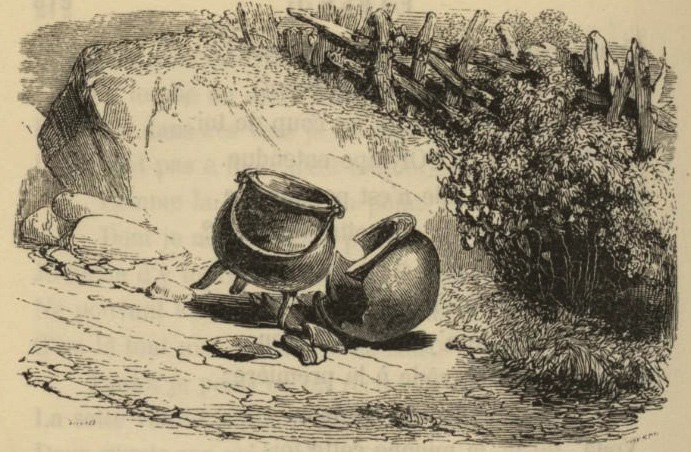
Occasionally, I’ve spoken about our housing challenges with area homeschoolers. It’s unbelievable how casually insensitive people can be. I think some just cannot even imagine what life is like for the rest of us. It really brings to mind the parable of the brass pot and the earthenware pot. Three of these things are not good responses to the other:

Our landlord is raising our rent $250 which a 13% increase and we can’t afford it. We can’t find any affordable housing within an hour of Boston, I don’t know what I’m going to do.I know just what you mean, we had to pay $600,000 over asking price for our home.
I know just what you mean, we own our home but want more space and we can’t find a home we want to buy.Oh, North Central Massachusetts? I was thinking of buying a 40-acre farm up there. There’s a 200-acre farm in Vermont for the same price that I would love to move to.

I started this blog with the hopes of finding and bringing together other BBHSers for mutual support. We’re a vanishing tiny minority in a group that’s already a minority. Yo, clay pots! Hit me up in the comments!

BBHSing is Hard, Part 2

This is the second part of a two part series. Click here for Part 1.

For a really long time I didn’t understand why I couldn’t get much traction with homeschoolers in Greater Boston. Sometimes I would meet people who we seemed to get along with, but then something made it become clear we weren’t compatible, and I wasn’t entirely sure what it was.

Photo by João Jesus on Pexels.com

In 2017 we lost our apartment to a $250 rent increase, we struggled for almost 6 months to find a new apartment. We couldn’t find anything within an hour’s drive of Boston and ended up in North Central Massachusetts. We lived there for almost 2 years, all the while working to find an apartment back in our old neighborhood.

So anyway, while in exile, what I learned about homeschoolers there opened my eyes. If you go outside the I-95 belt, and especially outside I-495, you will very quickly find more middle class and lower-middle class homeschoolers. You will easily find organized events catering to those homeschoolers. YMCA’s with very affordable homeschool gym and swim classes. A Boys & Girls club with a competitive swim team for $50/year. Mass Audubon homeschool classes that cost only $15 per class meeting. So many libraries with homeschool specific events! Coops that cost $50/year plus materials. Organizations of all kinds have easily found affordable homeschool classes.

I came to realize that the PRIMARY reason we couldn’t connect with homeschoolers in Greater Boston was that we were not in the same class. It’s so expensive in Greater Boston, it’s almost impossible for anyone below upper middle class to homeschool here. The cost of housing is the number 1 reason. If you have a middle class job, you really need 2 incomes to make it work in Greater Boston. Homeschooling and living on one income is wicked hard.

So many area homeschool events are SO EXPENSIVE! $300/academic class. Dance/martial arts/fine arts classes priced at $30/class meeting or above. Parts & Crafts! The coop at the Blue Hills! Not to mention that people with good resources are likely doing things on their own together and not advertising them on local homeschooling boards. Therefore many homeschoolers in the area are unavailable to BBHSers, we just can’t go where they go.

Add to that the fact that countless families have already been displaced and you have an awful demographic shift, where most of the people left in Boston are wealthy or poor. There are so few BBHSers because of the cold realities of economics which makes it harder to join together to create opportunities for ourselves.

There are always sacrifices that must be made when you live according to values. Sometimes it’s painful and solitary. And so, this post is dedicated to the BBHSers out there, homeschooling through stress, taking care of their families and making it work!

BBHSing is Hard, Part 1

When we ultimately came to realize our kids needed homeschooling, I was a totally newbie. I literally started out with the web search “What is homeschooling?”

Photo by Andrew Neel on Pexels.com

Wow, did I have a lot to learn back then. Based on rose-colored accounts of homeschooling in blogs and message boards for newbies, I started out thinking classical education would be best for our family. I started out thinking it wouldn’t be hard to make connections. I started out thinking coops were common wherever homeschoolers were. I was so optimistic, unprepared and naive. (Optimism has been one of my faults for a long time.)

Learning that homeschooling is not homogeneous* was probably my first surprise. Given how welcoming everyone sounded online when discussing homeschooling, I really was unprepared for the tension between various philosophical tribes of homeschooling.

I remember our first organized homeschooling class was a fall sport clinic. I went there with such excitement to be meeting local homeschoolers, but was quickly met with blank stares when I went to introduce myself to the field-side moms. I immediately felt like I was back in elementary school, trying to make friends at a new school with a very chilly social environment.

I tried again in the winter at the MFA homeschool classes and made some promising connections, but it was hard to socialize while accompanying my high needs 5 year old through his Artful Adventures class.

Spring came and we tried the Watertown playgroup at Arsenal Park. By then I was already struggling with isolation and worn down a bit by the demands of homeschooling. So arriving at Arsenal and not knowing anyone at a busy, fairly spread out park, was very hard for me to cope with. By then I already knew that there were homeschooling social pitfalls I couldn’t easily predict, which made branching out feel very difficult.

As a second-choice homeschooler, I naturally found more in common with other second-choice homeschoolers. We are a pragmatic bunch. But one of the downsides to making friends with second-choicers was that they might change things up as needs and strengths evolved. Our first homseschool friends all went back to school within the first 2 years of meeting them.

First-choicers are homeschooling for an entirely different set of reasons and had a well formed sense of identity and purpose for their homeschooling family. They weren’t ever going to send their kids to school. This is a lovely set of life choices, and I have always admired and also envied their certainty and preparation. But the difference in our reasons for homeschooling was fundamentally tied to how different we were as people and that inhibited the formation of closer ties.

* Although homeschooling in this area is NOT as racially diverse as the general population.

Stick around for Part 2, coming tomorrow!

Free Online Learning for You!

One of my favorite parts of this homeschooling journey has been the opportunity to fill in gaps in my own education. I love learning about history, culture and science.

Over the years I’ve used some online education portals to pursue some amazing classes. Not only is it a great way to pass time while my kids are doing their own work, it’s also a powerful way to demonstrate to them my values around education.

Two textbooks.  "Philosophy in the Flesh: The Embodied Mind and its Challenge to Western Thought" by George Lakoff and Mark Johnson.  A geology textbook, "Understanding Earth, 5th Edition" by Grotzinger, Jordan, Press, Siever.
Books I used with online courses, Source: BBHS

Here are my fav online learning portals, let me know of your favs in the comments!


EdX.org – This platform was created by Harvard and MIT and hosts courses from colleges and universities around the world. Most courses you can take for free. The first amazing course I took was “The Science of Religion” from the University of British Columbia. I’ve also taken courses on Chinese History, the basics of Neuroscience, Ethics, History of Architecture. Most EdX courses do not require any outside materials or text books, though classes may suggest optional readings. The site is user-friendly, and you can go at your own pace.


MIT OpenCourseWare – From their site: “MIT OpenCourseWare (OCW) is a web-based publication of virtually all MIT course content. OCW is open and available to the world and is a permanent MIT activity.” I’ve taken an introductory course on Geology through this platform. Compared to EdX.org, OCW isn’t as user friendly. The courses available, however, are actual college-level courses! You will often want to buy or borrow the textbooks for each course. I bought my textbook off eBay for less than $20. If you can get your course’s books from the library, these courses are truly free and high quality.

A few years ago, a homeschooler was in the news for using MIT OpenCourseWare for his entire homeschool education and getting admitted to MIT at age 15.


Coursera – This platform is a lot like EdX. The biggest difference with Coursera is that you need to keep up with each course’s timing. It’s not as relaxed as EdX, but I do think the courses are at a slightly higher level. I haven’t successfully finished a class on Coursera because of the timing issue, but have found some really great topics, such as entomology and fair use copyright law for blogs!


Do you use these online platforms yourself? Do your kids learn from them? Please share your experiences in the comments below!

Curiosity Stream on Sale

Until January 5, 2020, Curiosity Stream is having a sale on it’s annual plan – $12.99 for the year! I have been wanting to get a subscription to this for our homeschool for a while now. I’m sure that price is only good for one year, make sure you check out the terms and conditions on their site.

Do you have Curiosity Stream? What are your favorite documentaries? Please comment below 🙂

Homeschooling is not Homogeneous

Photo by Amber Lamoreaux on Pexels.com

In finding your group, or your tribe, it’s really useful to know who you are. This applies in life AND to homeschooling. Second-choice homeschoolers are at a disadvantage here. We come to homeschooling unexpectedly, sometimes with very little time to prepare.

Us second-choicers know about our own reasons for needing to homeschool, but don’t have a great handle on what first choice homeschoolers are about, nor have we firmed up our own values and conceptions of what we want in our own homeschools. We may even have a pre-conception that homeschooling is generally a single kind of thing, that homeschoolers are mostly alike.

There are several kinds of spectrums of homeschooling including style/method, religion, and class/expenditure. Here’s a brief overview of what’s out there, maybe it will help you find your group.

Style/Method

This spectrum runs from classical education to eclectic to radical unschooling.

Classical education can sometimes be referred to as schooling at home. It is a methodical, highly structured method of education, and often quite time intensive.

Radical unschooling is usually an entirely student-led endeavor. The parents give their children freedom to explore the world and learn about various topics on the child’s timeline, meaning when a child is interested in something, the child can pursue learning about it; the parent won’t dictate when or what a child will learn. Unschooling is sometimes referred to as self-directed education.

Both classical and unschooling homeschoolers often have deeply held values that inform how they structure their homeschool.

Eclectic is a “middle way.” It is characterized by parents who sometimes take a classical approach and sometimes take an unschooling approach. Most eclectic homeschoolers I’ve met are pragmatic and can see benefits from changing approaches at different seasons of homeschooling or with different subjects.

Class/Expenditure

Some homeschoolers are doing what the elite have always done through history, hired private tutors and provided educational experiences that the middle and lower classes cannot access.

In the middle, are parents who can send their children to homeschool enrichment organizations, for example Parts & Crafts in Somerville, and within reason get most classes that they would like from area organizations and obtain almost any curriculum they’re interested in.

At the other end are broke homeschoolers. We are a necessarily resourceful bunch, with low to extremely low budgets. We will sometimes combine resources with other broke homeschoolers. We will search out free, low-cost, or used curriculum. We research all the opportunities available to us to creatively meet the educational needs of our kids. We often create curriculums from library and internet resources. Free is our favorite word, 😀

Religion

This last spectrum is self-explanatory, and can be a touchy subject, so I’ll just leave it at that.

Conclusions

Just like the wider world, sometimes it’s difficult for people with strongly held values and beliefs to find common ground with people who have opposing but equally strong values and beliefs. It can be tricky for people of different classes to spend time together in regular life which applies to homeschooling too.

So my advice for finding your tribe is to figure out who you are and to look for people of similar dispositions. I’m not saying don’t try to work things out with people who are different, but if you find you are out of sync with a certain group of homeschoolers, don’t judge yourself, it’s likely there’s a mis-match.

If you’re in an area where the predominant style/class/religion of homeschoolers doesn’t match your own, it can feel tremendously confusing and isolating. Don’t give up, homeschoolers like you are out there and you can find one another!

Field Trips: Learn from my mistakes

If you build it, they will come. If you ask everyone for their preferences, it’ll never happen!

Imagine the llamas are cats and you’re trying to herd them
Photo by Dmitry Zvolskiy on Pexels.com

Here’s what I’ve learned so far about trying to organize a group outing. Don’t poll your group for day and time suggestions! You’ll get wildly varying answers, and then you’ll be confronted with an unbearable choice of who you’ll have to exclude when you pick the day. Maybe that’s an easy things for some, but one of my outing plans completely fell apart at that point because I couldn’t choose.

Instead, either set the day and time that’s good for you and go with that, or pick only ONE or TWO friends to coordinate with before advertising the outing to a wider Homeschooling community.

In your early days of homeschooling, when you’re new and meeting people, definitely get together with another person to plan an outing. As people in the community get to know you better, you’re likely to get a greater response when you create a field trip or outing. Reputation matters.

Have you ever tried to plan an outing but it fell apart? What happened and do you have any tips to help others? Please comment below!